AREI inspection in 2026: when mandatory, what does it cost, how does it work?
A conformity check takes place before a new installation or an important modification or extension is put into use. Non-important changes follow a different documentation procedure: not every small alteration automatically requires a new pre-use inspection. Domestic installations undergo periodic inspection every 25 years after a first compliant inspection. The FPS also distinguishes sale and power-increase inspections.
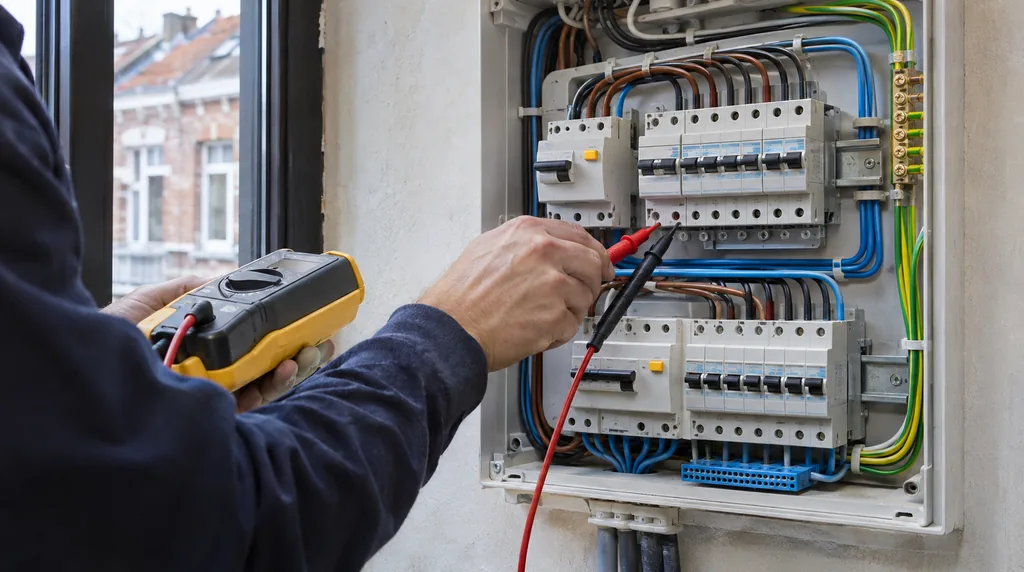
The AREI (General Regulations on Electrical Installations) is the Belgian standard for electrical safety in homes. In Wallonia it is called "contrôle RGIE". Both mean the same thing. In this guide you can read when an inspection is mandatory, what it costs, and how best to prepare.
When is an AREI inspection mandatory?
A conformity check takes place before a new installation or an important modification or extension is put into use. Non-important changes follow a different documentation procedure: not every small alteration automatically requires a new pre-use inspection. Domestic installations undergo periodic inspection every 25 years after a first compliant inspection. The FPS also distinguishes sale and power-increase inspections.
For a sale, the obligation described by the FPS concerns older domestic installations that have not undergone a conformity examination or full examination after 1 October 1981. The buyer receives the report at the deed. Where that sale inspection finds infringements, the buyer has 18 months from the date of the deed to put the installation in order and arrange a new inspection by an approved body of their choice. [1] FPS Economy: official procedure
Seller and buyer may record in the deed that the sale visit is unnecessary because the installation will be fully renovated or the dwelling demolished. The buyer informs the Directorate-General for Energy and, where a new domestic installation is put into use, provides its inspection report under the FPS procedure. [1] FPS Economy: official procedure
2. What does an AREI inspection cost?
| Type of home | Price (average) | Note |
|---|---|---|
| Apartment (1-2 bedrooms) | €180-€220 | Quick inspection, 30-45 min |
| Terraced house (3-4 bedrooms) | €220-€280 | Standard, 1-1.5 hours |
| Villa (4-6 bedrooms) | €280-€350 | Larger installation, 1.5-2 hours |
| Very large villa (>250m²) | €350-€500 | Complex installation, 2-3 hours |
| Re-inspection after a negative report | €120-€180 | Limited check after repairs |
The approved body quotes its inspection and complementary-visit fees. Request the price and scope in writing.
3. Who can carry out an inspection?
An AREI inspection may ONLY be carried out by an approved inspection body (in Flanders: accredited by the FPS Economy, in Wallonia: by the SPW). This is never your own electrician — the inspector must be independent.
Approved inspection bodies in Belgium (largest organisations):
- Vinçotte — www.vincotte.be
- SGS — www.sgs.com/be
- APK Group — www.apkgroup.be
- Electron-Test — www.electron-test.be
- TÜV — www.tuv.be
We arrange the inspection for you when we carry out the electrical work. You then pay the inspection directly to the inspection body, with no extra charges.
4. What is inspected?
An AREI inspector checks 80+ points. The most important ones:
- Fuse box — 30mA residual current device(s) present? Main switch correct? Number of circuits vs. circuit breakers?
- Have earthing, protection and equipotential bonding assessed by the electrician and inspection body against the installation characteristics and applicable requirements.
- Insulation resistance — all cables tested for leakage current
- Continuity — all earth conductors correctly connected
- Sockets — all earthed? Polarity correct? Child protection where needed?
- Lighting — IP rating in wet rooms (bathroom at least IP44 in zones 1-2)
- Specific zones — bathroom (3 zones), kitchen, outdoors
5. What if the report records infringements?
If a pre-use conformity check finds infringements, the installation or affected part may not be put into use. Remedy the infringements and arrange another pre-use conformity check. [1] FPS Economy: official procedure
After a periodic inspection, a power-increase inspection or the buyer’s new inspection after a sale, infringements must be remedied without delay. Where the installation stays in service, adequate measures must prevent danger to people and property. The complementary inspection is required within a maximum of one year from the inspection, by the same approved body. [1] FPS Economy: official procedure
For a sale, the obligation described by the FPS concerns older domestic installations that have not undergone a conformity examination or full examination after 1 October 1981. The buyer receives the report at the deed. Where that sale inspection finds infringements, the buyer has 18 months from the date of the deed to put the installation in order and arrange a new inspection by an approved body of their choice. [1] FPS Economy: official procedure
For the complementary inspection procedure, commissioning a second report from a different approved body is an infringement of Book 1, subject to sanctions. A compliant second report does not erase obligations under the first; the FPS advises informing the first body. This is distinct from the buyer’s free choice for the new inspection after a sale. If remedial action is not followed up or infringements remain at the complementary visit, the approved body informs the Directorate-General for Energy. [1] FPS Economy: official procedure
Failed electrical inspection: steps and deadlines
6. Preparing for the inspection
- ✅ Replace all old porcelain fuses with a modern fuse box with circuit breakers (€800-€1,500).
- ✅ Install at least one 30mA residual current device (legally required since 1981 for new installations).
- ✅ Earth all metal parts near water (radiator, water pipes, bath).
- ✅ Use IP44 light fittings in bathroom zones 1 and 2.
- ✅ Label every circuit in the fuse box: "1 = living room", "2 = kitchen", etc.
- ✅ Install a main switch (40-63A) at the fuse box input.
7. AREI and RGIE: the same regulation
AREI = Algemeen Reglement op de Elektrische Installaties, the Dutch name.
RGIE = Règlement Général sur les Installations Électriques, the French name.
Both are the same standard. "RGIE" is used more often in Brussels and Wallonia, "AREI" in Flanders. The inspection itself is identical.
8. Frequently asked questions (FAQ)
When is an AREI inspection mandatory in Belgium?
Rental requirements must be checked for the region and the circumstances of the property. This guide does not infer a single nationwide starting date for rentals.
What does an AREI inspection cost in 2026?
Between €180 and €350 for an average home (apartment or terraced house). Large villas up to 400m²: €350-€500. After a negative result and re-inspection: +€120-€180.
How long is an AREI certificate valid?
For a sale, the obligation described by the FPS concerns older domestic installations that have not undergone a conformity examination or full examination after 1 October 1981. The buyer receives the report at the deed. Where that sale inspection finds infringements, the buyer has 18 months from the date of the deed to put the installation in order and arrange a new inspection by an approved body of their choice.
Need help with electrical work + the inspection?
We carry out the work and arrange the AREI inspection. Fixed price, no surprises. 10-year guarantee.
→ Request your free quoteOr call directly: 0485 44 55 12